


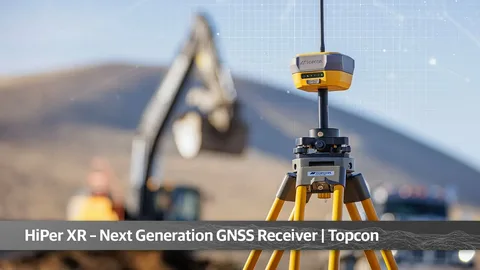
Global Navigation Satellite Systems (GNSS) have become integral to our daily lives, powering everything from navigation in vehicles to location-based services on smartphones. With advances in technology, GNSS is evolving rapidly, opening the door to new possibilities. As we look toward the future, it’s essential to explore the key trends that will shape the next decade of gnss positioning system.
In this article, we’ll discuss the future trends in GNSS positioning systems, the technological innovations on the horizon, and what to expect over the coming decade.
1. Integration of New GNSS Systems
The Rise of New Satellites
GNSS systems, including GPS, GLONASS, Galileo, and BeiDou, have been the cornerstone of satellite-based positioning. However, with the increasing demand for more precise and reliable positioning data, new satellite constellations are being launched. In the next decade, we can expect more countries to deploy their own GNSS systems, contributing to a more robust and diverse global positioning network.
Galileo, the European Union’s GNSS system, and China’s BeiDou are already gaining momentum. These systems will not only improve coverage but also provide better accuracy, particularly in urban environments or areas with poor satellite visibility.
Multiconstellation and Multiband GNSS
One of the key trends in GNSS positioning is the shift toward multiconstellation and multiband receivers. By combining signals from multiple satellite constellations and using multiple frequency bands, receivers will be able to achieve far greater accuracy, resilience, and reliability. This trend will be particularly beneficial for applications like autonomous vehicles, where high precision is critical.
2. Advancements in Signal Processing Technology
Enhanced Signal Integrity
As GNSS systems evolve, so too does the sophistication of the signal processing technology that powers them. The next decade will see significant improvements in signal integrity, reducing the impact of interference, jamming, and spoofing. With innovations in software-defined radio (SDR) and advanced algorithms, GNSS systems will be more resistant to external threats and environmental challenges.
Increased Use of Real-Time Kinematics (RTK)
Real-time kinematics (RTK) technology is already widely used in high-precision applications, such as surveying and agriculture. However, in the next decade, RTK will become more accessible, with wider availability of low-cost, high-performance RTK receivers. This will be driven by advancements in network-based corrections and the development of more efficient algorithms for real-time positioning.
3. Applications in Autonomous Systems
GNSS for Autonomous Vehicles
One of the most exciting developments in GNSS positioning is its application in autonomous systems. As self-driving vehicles become more mainstream, the accuracy and reliability of GNSS will be crucial for ensuring safe and efficient navigation. GNSS positioning systems will integrate with other sensors—such as LiDAR, radar, and cameras—to provide a comprehensive solution for autonomous navigation.
Over the next decade, expect GNSS to evolve into a key enabler of autonomous driving technology, where the ability to provide centimeter-level accuracy will be paramount.
Drones and UAVs
Similarly, drones and Unmanned Aerial Vehicles (UAVs) will benefit greatly from advancements in GNSS positioning systems. GNSS will not only guide these systems but will also enhance their capabilities for surveying, inspection, and logistics. Innovations in precise point positioning (PPP) will enable drones to fly with greater autonomy and precision, opening up new use cases for industries like agriculture, infrastructure monitoring, and logistics.
4. Integration with 5G and IoT
GNSS in the 5G Era
The future of GNSS will also be shaped by the rise of 5G networks. 5G is expected to deliver ultra-low latency and high bandwidth, which will enable real-time GNSS applications to operate more efficiently and with fewer delays. The synergy between GNSS and 5G will benefit a wide array of applications, from autonomous vehicles to smart cities.
With 5G’s promise of near-instantaneous communication, GNSS positioning data will be delivered faster and more accurately, enabling critical applications such as real-time tracking and fleet management.
IoT and Location-Based Services
The Internet of Things (IoT) will be another major driver of GNSS innovation. As more devices become interconnected, accurate location data will be essential for optimizing operations in sectors like logistics, healthcare, and urban planning. In the next decade, GNSS systems will be integrated into a vast network of IoT devices, enabling precise location-based services (LBS) that will revolutionize industries and improve the quality of life for individuals.
5. Resilience and Redundancy: Towards More Robust Systems
GNSS in Challenging Environments
As the dependence on GNSS grows, there will be an increased focus on making positioning systems more resilient. In the coming years, we will see a stronger emphasis on hybrid positioning systems that combine GNSS data with inputs from alternative sensors such as inertial navigation systems (INS), visual odometry, and Wi-Fi-based positioning. This will be especially important in environments where GNSS signals are weak or obstructed, such as in urban canyons or indoor locations.
Backup Systems for GNSS
Another important trend is the development of backup systems for GNSS, ensuring that essential services can continue to operate even if GNSS signals are lost or compromised. These systems will integrate satellite-based positioning with terrestrial-based technologies, offering an additional layer of reliability and security.
Conclusion: The Future of GNSS Positioning Systems
The future trends in GNSS positioning systems point toward an exciting new era in navigation and location-based technologies. With advancements in satellite constellations, signal processing, autonomous systems, and the integration with 5G and IoT, the next decade will see GNSS positioning evolve into a more accurate, reliable, and versatile technology.
